Our own studies are being prepared. Meanwhile, a solid body of peer-reviewed research already answers many of the questions this site deals with. Here is what it says, with the reference to every source so you can read it yourself.
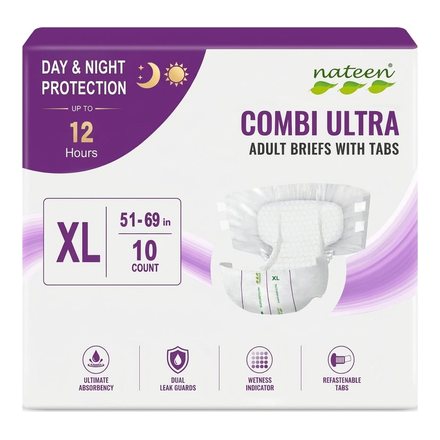
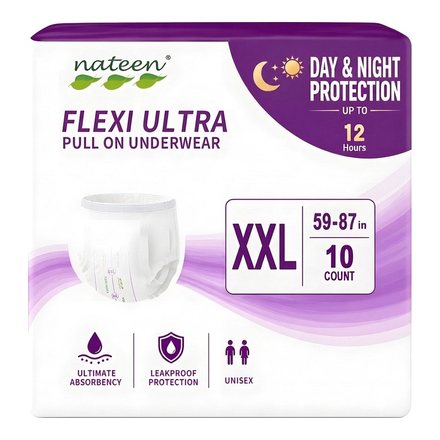
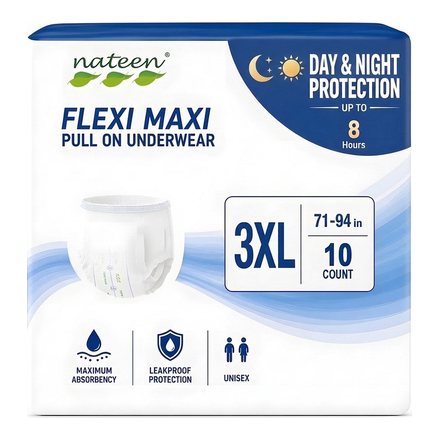
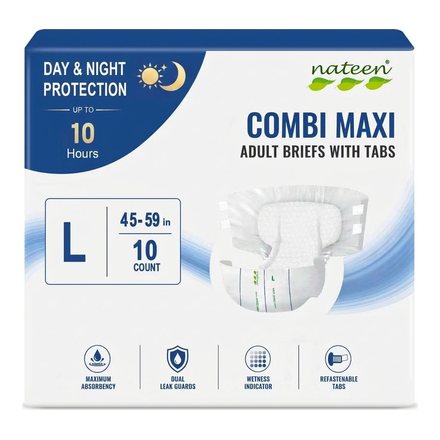
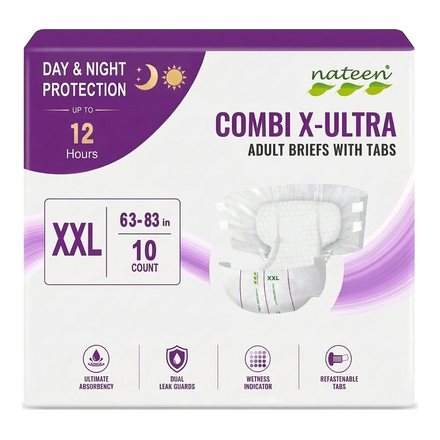
Three crossover trials compared the main designs. For women during the day, pull-ups did best overall; for men, briefs did best overall and on leakage, and were the most cost-effective design.
Fader M, Cottenden A, Getliffe K, et al. (2008). Absorbent products for urinary/faecal incontinence: a comparative evaluation of key product designs. Health Technology Assessment 12(29).
Read the source ↗ · open access
No single design is best for everyone: combining designs — one for the day, another for the night, one for going out — may work better and cost less than using one design all the time.
Fader M, Cottenden AM, Getliffe K. (2008). Absorbent products for moderate-heavy urinary and/or faecal incontinence in women and men. Cochrane Database of Systematic Reviews, CD007408.
Read the source ↗ · open access
Laboratory capacity (Rothwell) does correlate with performance in use, strongly enough to guide purchasing — but at the same capacity, briefs leaked far less than inserts. Design matters as much as grams.
Cottenden AM, Fader MJ, Pettersson L, Brooks RJ. (2003). How well does ISO 11948-1 (the Rothwell method) for measuring the absorption capacity of incontinence pads in the laboratory correlate with clinical pad performance. Medical Engineering & Physics 25(7): 603-613.
Read the source ↗
Within one laboratory the Rothwell method is repeatable (variation rarely above 5 %), but laboratories differ systematically by up to 13 %: absolute figures from different labs cannot be compared directly.
Cottenden AM, Rothwell JG, Leander H, Grau C, Brooks RJ. (2002). An investigation of the repeatability and reproducibility of ISO 11948-1 (the Rothwell method). Medical Engineering & Physics 24(2): 159-163.
Read the source ↗
12 products worn by 55 nursing-home residents: the Rothwell method was repeatable but blind to leg cuffs, whereas absorption before leakage on a mannequin predicted real leakage better and detected the benefit of the cuffs.
Cottenden A, Macaulay M. (2019). An investigation of laboratory test methods for predicting the in-use leakage performance of urine-absorbing aids in nursing homes. Proc IMechE Part H 233(1): 23-34.
Read the source ↗
For underpads, no single laboratory test predicted leakage well; combining a capacity test with an absorption-time test predicted user acceptability to within about 8 percentage points.
Cottenden AM, Dean GE, Brooks RJ, et al. (1998). Disposable bedpads for incontinence: predicting their clinical leakage properties using laboratory tests. Medical Engineering & Physics 20(5): 347-359.
Read the source ↗
Randomised trial in older women: 43 % recovered completely from dermatitis with the improved pad, against 13 % with the usual pad, and healing was faster.
Sugama J, Sanada H, Shigeta Y, Nakagami G, Konya C. (2012). Efficacy of an improved absorbent pad on incontinence-associated dermatitis in older women: cluster randomized controlled trial. BMC Geriatrics 12: 22.
Read the source ↗ · open access
Wet pads raised water loss through the skin and skin hydration in older volunteers; the authors conclude that pad design — particularly the acquisition layer — changes the skin’s microclimate.
Koudounas S, Abbas S, Voegeli D. (2020). The effect of absorbent pad design on skin wetness, skin/pad microclimate, and skin barrier function. J Wound Ostomy Continence Nurs 47(5): 497-506.
Read the source ↗
A brief with an acidic cellulose layer and breathable side panels kept a skin-surface pH of about 4.6 over repeated wetting, against 7.1 for standard briefs.
Beguin A-M, Malaquin-Pavan E, Guihaire C, et al. (2010). Improving diaper design to address incontinence associated dermatitis. BMC Geriatrics 10: 86.
Read the source ↗ · open access
International expert consensus: incontinence-associated dermatitis is a recognised risk factor for pressure ulcers; prevention starts with keeping the skin dry and protected.
Beeckman D, et al. (2015). Incontinence-associated dermatitis: moving prevention forward. Proceedings of the Global IAD Expert Panel. Wounds International.
Read the source ↗ · open access
The superabsorbent of a commercial diaper swelled about 295 g/g in pure water but only about 20 g/g in synthetic urine: salts change everything, which is why serious tests use saline.
Simões B, Rebelo RC, Ledesma S, et al. (2025). Development of polyampholyte cellulose-based hydrogels for diapers with improved biocompatibility. Gels 11(4): 282.
Read the source ↗ · open access
Particle size is a trade-off: larger particles absorb more in total but more slowly — the reason why we specify a particle size distribution, not just a polymer.
Yang Y, Liang Z, Zhang R, et al. (2024). Research advances in superabsorbent polymers. Polymers 16(4): 501.
Read the source ↗ · open access
Surface crosslinking is essential for hygiene use: it is what lets the polymer keep absorbing under the pressure of the body (absorption under load).
Kim HC, Kwon YR, Kim JS, et al. (2022). Computational approach to the surface-crosslinking process of superabsorbent polymer via central composite design. Polymers 14(18): 3842.
Read the source ↗ · open access
Fluff pulp gives the core its structure and wicking, and prevents gel blocking — the wall that swollen superabsorbent particles form when they are not kept apart by fibres.
Hubbe MA, Ayoub A, Daystar JS, Venditti RA, Pawlak JJ. (2013). Enhanced absorbent products incorporating cellulose and its derivatives: a review. BioResources 8(4): 6556-6629.
Read the source ↗ · open access
Life-cycle assessment of diapers in Europe: materials dominate the environmental footprint, and the biggest gains came from lighter products and the use of superabsorbents.
Cordella M, Bauer I, Lehmann A, Schulz M, Wolf O. (2015). Evolution of disposable baby diapers in Europe: life cycle assessment of environmental impacts and identification of key areas of improvement. Journal of Cleaner Production 95: 322-331.
Read the source ↗ · open access
Industry report for adult incontinence products: raw materials account for about 50–60 % of the carbon footprint, manufacturing 4–8 %, logistics 6–10 % and end of life 30–35 %.
EDANA. The central role of absorbent hygiene products in the management of adult urinary incontinence: benefits, costs and environmental impact. EDANA, Brussels (industry report).
Read the source ↗ · open access
 by Nateen